· 3 min read · By the Kinfolk team at Kinfolk Digital Ltd
Should couples share their location?
03
Signs location sharing has become controlling
Be honest about these, whether you are the one being watched or the one doing the watching. Your partner asks about places they saw on the map, or gets upset when your location does not match what you told them. Turning your location off leads to a row, the silent treatment or an accusation. You were pressured into sharing, or sharing was set up on your phone without you being asked. Only one of you shares. You feel you have to explain every stop.
Any one of those on a bad day is human. A pattern of them is a warning sign. Monitoring a partner's location, messages and spending is a recognised part of coercive control, and in England and Wales coercive control is a criminal offence. If this sounds familiar and you feel unsafe, the National Domestic Abuse Helpline on 0808 2000 247 is free and confidential, and in the US the National Domestic Violence Hotline is 1-800-799-7233.
04
How to talk about it before you switch it on
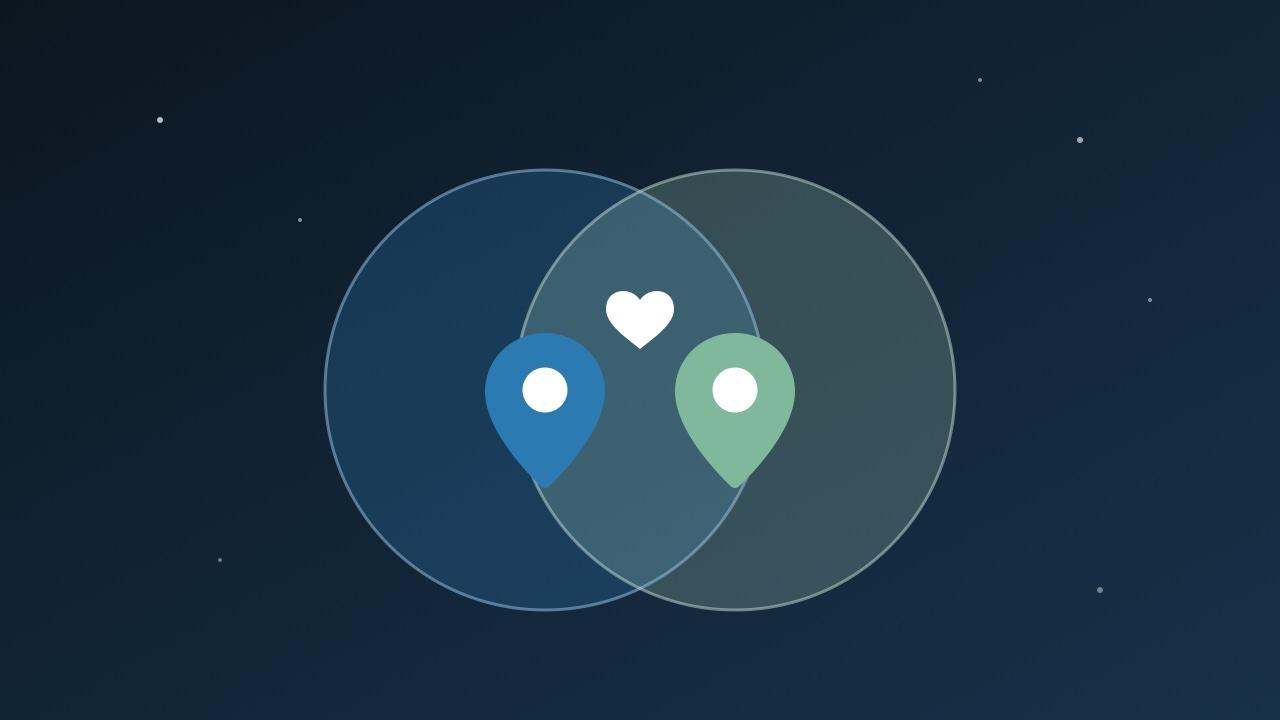
Have the conversation out loud, not by sending a share request. Talk about why you each want it. Is it for late journeys home? For travel? For every day? Then agree a few simple rules. Both of you share or neither does. Either person can pause it for an evening without having to explain. Nobody asks about the map unless the other person brings it up.
Many couples find that sharing for a reason works better than sharing all the time. Turn it on for the drive back from a friend's house, the night out, the first week in a new city, and let it end when the journey ends. That keeps the reassurance and drops the constant background watching.
05
What to switch off after a breakup
Location sharing is easy to forget after a relationship ends, and it can keep running for months. Go through each place it might live. Find My on iPhone, including Family Sharing if you were in the same family group. Google Maps location sharing. Life360 Circles. Snap Map and the friends allowed to see you. WhatsApp chats with a live location share. Any car app that links your car to their account.
On an iPhone, Safety Check in Settings, Privacy and Security can review and stop sharing in one place, and its Emergency Reset option is built for exactly this. If you shared passwords or an Apple Account or Google account, change them. What the other person sees when you stop explains which apps will make the change obvious.