· 2 min read · By the Kinfolk team at Kinfolk Digital Ltd
Can the police track your phone?
01
The short answer
Police can locate a phone, but not on a whim. In both the UK and the US they usually need either a legal authorisation, a genuine emergency, or your own consent. Most of what they get comes from mobile networks and app companies, not from secretly controlling your handset.
It also matters what kind of location you mean. A live position right now, a record of where a phone was last month, and the content of messages are treated as different things, with different rules.
02 · Question
How does a mobile network know where your phone is?
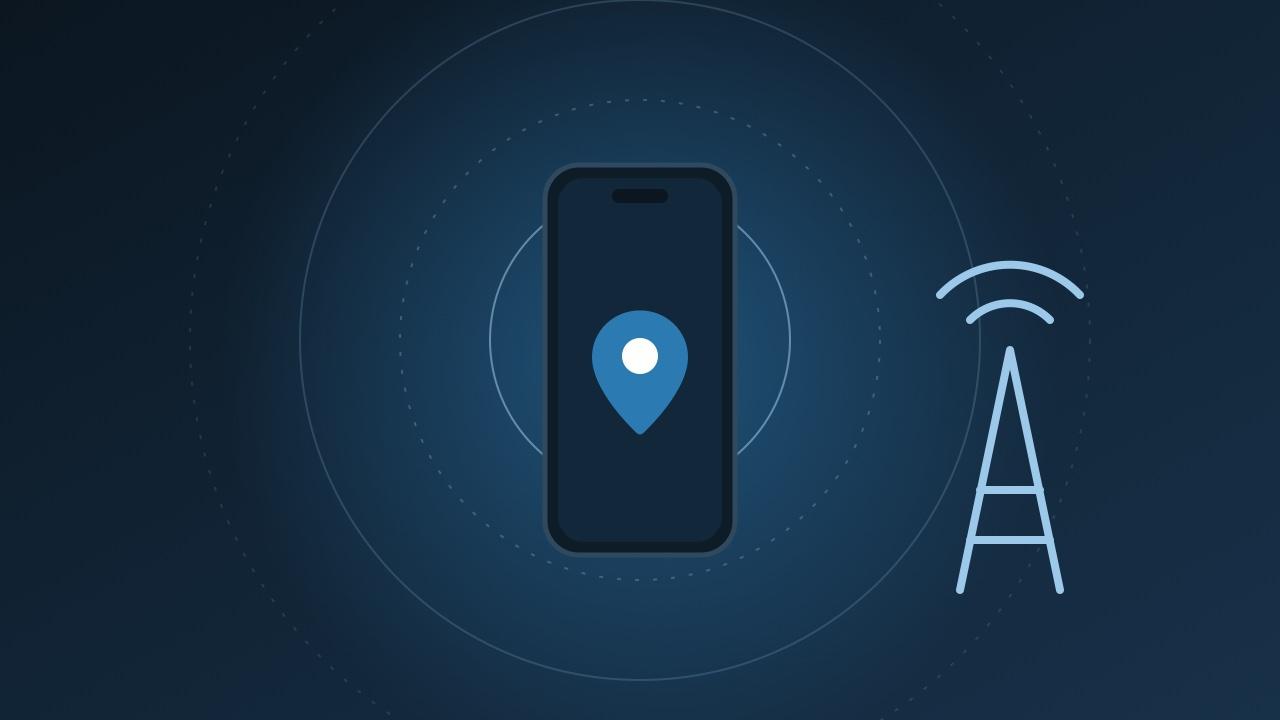
Every phone that is switched on and has signal talks to nearby phone masts. The network logs which masts it used and when. That gives a rough area, sometimes a few hundred metres in a city and several kilometres in the countryside. Investigators call the analysis of these records cell site analysis.
That record exists whether or not your Location Services are on, because it is how calls and data reach you in the first place. It is less precise than GPS, but it is often enough to show which part of town a phone was in.
03
What happens when you call 999 or 911
When you call 999 or 112 in the UK, most modern phones automatically send their GPS and Wi-Fi location to the emergency services. The system is called Advanced Mobile Location, and it works even if Location Services are off for your apps. It is only triggered by the emergency call itself.
US emergency calls send location too, through a mix of network data and the phone's own location. This is the one time your phone hands over a precise position without you doing anything, and it is there to get help to you quickly.
04
The legal rules in the UK and US
In the UK, police and other agencies request communications data, including location records, under the Investigatory Powers Act 2016. Requests need authorisation and are overseen by an independent commissioner. In an emergency, such as a missing person at risk, there are faster routes.
In the US, the Supreme Court decided in Carpenter v. United States in 2018 that police generally need a warrant to obtain historical cell site location records from a network. Real time tracking and emergencies are governed by a patchwork of federal and state rules. None of this is legal advice, and the details change, so if it matters to you, speak to a solicitor or lawyer.
05 · Question
Can police see where you have been in apps?
Companies like Apple, Google and Meta publish transparency reports showing how often they receive requests from law enforcement. If an app stores a history of where you have been, that history can in principle be requested. Apps that do not keep a history have less to hand over.
That is one reason to think about which apps keep a timeline of your movements. How to turn off location history walks through the main ones.